
Metamorfosen van Ovidius
1606
Medium
etching
Dimensions
117; 104
Rights
Public Domain
About this artwork
height 104 mm x width 117 mm
Art Historical Context
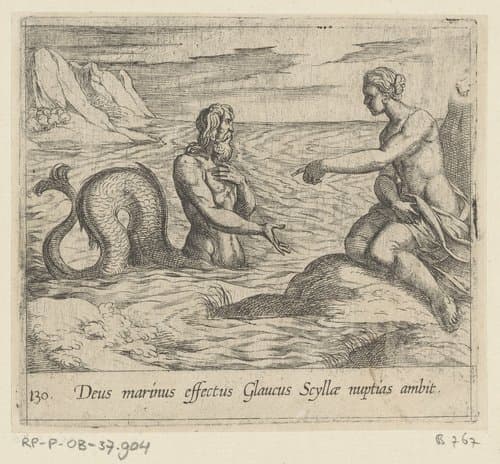
Antonio Tempesta's *Metamorfosen van Ovidius* (1606) is a exquisite etching capturing a scene from the ancient Roman poet Ovid's epic poem *Metamorphoses*, a cornerstone of classical mythology filled with tales of transformation, love, and divine intervention. Tempesta, a prolific Italian artist active in late Renaissance and early Baroque Florence under Medici patronage, specialized in dynamic mythological and landscape scenes. This small-scale print (104 × 117 mm) belongs to his renowned series of 150 etchings illustrating Ovid's work, making classical narratives accessible to a wider audience through affordable reproductions. Etching, Tempesta's favored medium, involved drawing acid-resistant lines on a copper plate, allowing for intricate details and fluid lines that convey the poem's dramatic metamorphoses—gods turning into animals, humans into trees, and lovers into constellations. Produced in 1606, it reflects the era's fascination with antiquity during the Baroque's rise, blending Mannerist elegance with emerging dramatic energy. These prints were often bound into books, influencing artists across Europe and preserving Ovid's stories visually. Visitors will appreciate how Tempesta's precise technique distills epic myths into intimate formats, bridging ancient literature and 17th-century print culture. A testament to etching's revolutionary role in democratizing art, this piece invites us to ponder the timeless allure of change and fate.
About the Artist
Antonio Tempesta · 1555–1630
Antonio Tempesta (1555–1630), known as 'Il Tempestino,' was a Florentine painter and printmaker whose extraordinary output of approximately 1,700 etchings made him one of the most influential printmakers of the early Baroque period. Born in Florence and trained under Santi di Tito and the Flemish master Joannes Stradanus, he enrolled in the Accademia del Disegno in 1576 before relocating to Rome i...