
Metamorphoseon sive transformationum
1606
Medium
etching
Dimensions
117; 104
Rights
Public Domain
About this artwork
height 104 mm x width 117 mm
Art Historical Context
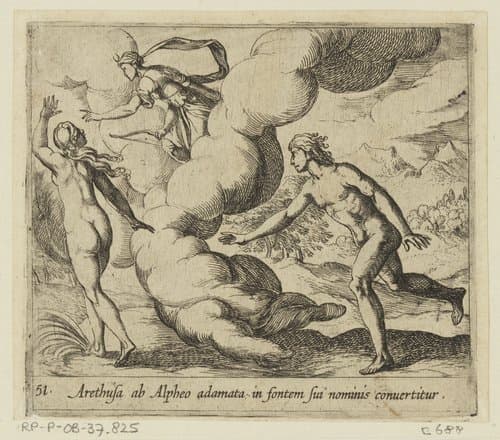
Antonio Tempesta's *Metamorphoseon s transformationum* (1606) is a captivating etching from his renowned series illustrating Ovid's ancient Roman poem *Metamorphoses*. This compact print, measuring just 104 mm high by 117 mm wide, captures one of the epic's mythical transformations—stories of gods, heroes, and mortals changing forms through divine whims or fateful events. Tempesta, a Flemish-Italian artist active in late Renaissance Rome, was a master etcher whose works bridged Mannerism and early Baroque, blending intricate detail with dramatic energy to popularize classical mythology among Europe's elite collectors. Etching, Tempesta's chosen medium, allowed for fine lines and tonal depth using acid to bite into metal plates, making high-quality reproductions affordable and widespread. Published as a set of over 140 plates, this series was a publishing triumph, influencing artists like Rubens and Rembrandt. Its small scale suited intimate study or framing, turning Ovid's tales into accessible art for scholarly homes. Visitors will appreciate how Tempesta's vivid scenes—bursting with motion and emotion—brought antiquity alive during the 17th century's renewed fascination with classical lore, reminding us of art's power to transform words into visual wonder.
About the Artist
Antonio Tempesta · 1555–1630
Antonio Tempesta (1555–1630), known as 'Il Tempestino,' was a Florentine painter and printmaker whose extraordinary output of approximately 1,700 etchings made him one of the most influential printmakers of the early Baroque period. Born in Florence and trained under Santi di Tito and the Flemish master Joannes Stradanus, he enrolled in the Accademia del Disegno in 1576 before relocating to Rome i...