
Military Epaulets
Unknown Artist
1875–80
Medium
Wool, metallic
Classification
Military Epaulets
Culture
American
Department
Costume Institute
Museum
Metropolitan Museum of Art, New York, NY
Credit
Brooklyn Museum Costume Collection at The Metropolitan Museum of Art, Gift of the Brooklyn Museum, 2009; Gift of Eleanor Fayerweather, 1949
Accession Number
2009.300.6610a, b
Rights
Public Domain
Tags
Art Historical Context
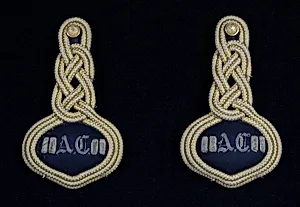
These striking Military Epaulets, crafted between 1875 and 1880 by an unknown American artist, exemplify the shoulder decorations worn by U.S. Army officers during post-Civil War era. Housed in the Metropolitan Museum of Art's Costume Institute, they form part of the Brooklyn Museum Costume Collection, gifted in 2009 from Eleanor Fayerweather's 9 donation. Made from wool and metallic threads, these epaulets essential uniform accessories, signaling rank and authority through their elaborate design. In the late 19th century, as the American military modernized after the Civil War, epaulets like these transitioned from battlefield necessities to symbols of discipline and national pride. The wool provided durability for active service, while shimmering metallic embroidery—likely gold or silver bullion—added a ceremonial flair, reflecting European influences adapted to American tastes. They highlight how military fashion intertwined with broader cultural shifts toward professionalism in the standing army. Today, these epaulets offer a tactile glimpse into Gilded Age militarism, reminding us how clothing conveyed power and identity. Visitors can appreciate their craftsmanship, a testament to skilled, anonymous artisans who stitched hierarchy into fabric.