
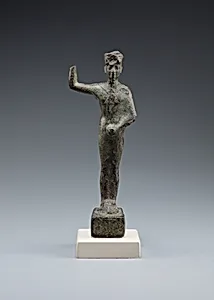
Min statuette
Unknown Artist
ca. 1070–332 B.C.
Medium
Cupreous metal, precious metal inlay
Dimensions
H. 13 cm (5 1/8 in.); W. 5 cm (1 15/16 in.); D. 3.3 cm (1 5/16 in.) H. (with tang): 13.6 cm (5 3/8 in.)
Classification
Statuette, Min
Period
Third Intermediate Period–Late Period
Department
Egyptian Art
Museum
Metropolitan Museum of Art, New York, NY
Credit
Bequest of Mrs. Erika Iskot, in memory of her husband, Dr. Herman Iskot, 1995
Accession Number
1995.395
Rights
Public Domain
Art Historical Context
This exquisite bronze statuette of Min, the ancient Egyptian god of fertility and agriculture, hails from Egypt's Third Intermediate Period to Period (ca. 1070–332.C.), spanning Dynasties 21–30. Min is typically shown as a mummiform figure with an phallus, emphasizing his role in ensuring bountiful harvests and virility. Crafted during a time of political fragmentation after the New Kingdom's glory, such votive figures reflect enduring religious devotion, likely placed in temples or shrines to invoke divine favor. The statuette's cupreous metal—likely a copper alloy akin to bronze—with precious metal inlays demonstrates sophisticated Late Bronze Age techniques. Artisans hammered and cast the metal, then inlaid silver or gold for eyes, jewelry, or accents, creating a luminous, sacred sheen that caught temple light. Standing just 13 cm tall (13.6 cm with its base tang for mounting), its compact form highlights the portability and intimacy of personal piety in Egyptian worship. A generous bequest to the Metropolitan Museum of Art in 1995, this piece offers a window into Egypt's resilient spirituality, blending artistry with profound cultural symbolism. Visitors will appreciate its tactile presence and the god's bold, life-affirming iconography.