
Mirror
Unknown Artist
Medium
Bronze
Dimensions
Diam. 4 3/16 in. (10.6 cm)
Classification
Mirrors
Culture & Period
Japan · Nanbokuchō (1336–92)–Muromachi (1392–1573) period
Department
Asian Art
Museum
Metropolitan Museum of Art, New York, NY
Credit
Rogers Fund, 1917
Accession Number
17.118.104
Rights
Public Domain
Art Historical Context
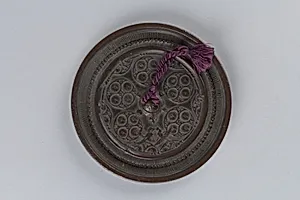
This delicate bronze mirror, hailing from Japan's Nanbokuchō (6–92) to Muromachi (13921573) periods, a glimpse into the refined artistry of medieval Japan. Measuring just 4 3/16 inches (10.6 cm) in diameter, it was likely a personal handheld object, cherished by samurai, nobles, or courtiers amid the era's turbulent civil wars between rival imperial courts and the rise of Ashikaga shog. Crafted in bronze—a durable, prestigious medium prized for its luster and workability—the mirror exemplifies East Asian casting techniques. Artisans poured molten bronze into molds, often creating intricately decorated backs with symbolic motifs, though specifics here remain enigmatic due to the unknown artist. Mirrors held profound cultural significance in Japan, serving not only for grooming but as talismans warding off evil spirits, their reflective surfaces evoking Shinto purity and Buddhist impermanence. Displayed in the Metropolitan Museum of Art's Asian Art department (Rogers Fund, 1917), this artifact bridges daily life and spiritual symbolism, reminding us how everyday objects embodied the elegance and resilience of Muromachi-era Japan.