
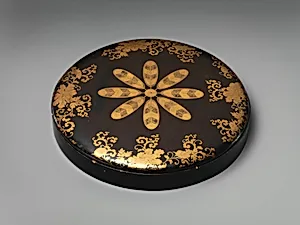
黒餅に八鷹羽家紋牡丹蒔絵鏡箱|Mirror, and Mirror Box (Kagami-bako) with Feather Crest and Peony Scrolls
Unknown Artist
Medium
Lacquered wood with gold hiramaki-e on black lacquer ground; bronze mirror
Dimensions
Diam. 14 7/8 in. (37.8 cm)
Classification
Lacquer
Culture & Period
Japan · Box: Edo period (1615–1868), 18th century; Mirror: Kamakura period (1185–1392)
Department
Asian Art
Museum
Metropolitan Museum of Art, New York, NY
Credit
Gift of Florence and Herbert Irving, 2015
Accession Number
2015.500.2.50a–c
Rights
Public Domain
Art Historical Context
This exquisite *Mirror Box (Kami-bako)* from Japan's Edo period (1615–1868), crafted the 18th century houses a bronze mirror dating to the earlier Kamakura period (118–1392). Measuring nearly 15 inches in diameter, the lacquered wood box features a striking black lacquer ground—evoking the texture of rice cakes (kuro-mochi)—adorned with intricate gold *hiramaki-e* designs. flat sprinkled-gold techniques depict peony scrolls and the eight hawk feather family crest, symbols of aristocratic lineage and prosperity, showcasing the meticulous artistry of Japanese lacquerware. Lacquer boxes like this were prized possessions, used to safely store mirrors for daily grooming or tea ceremonies, reflecting the era's refined aesthetic of *wabi-sabi* elegance blended with opulent decoration. The gold flecks catch the light, creating a shimmering effect that highlights the box's status as a luxury item for samurai or wealthy merchants. The pairing of the antique Kamakura mirror—known for its durability and ritual significance—with the Edo box underscores Japan's tradition of heirloom treasures, blending centuries of craftsmanship. A generous gift to the Metropolitan Museum of Art from Florence and Herbert Irving in 2015, it invites visitors to appreciate the enduring beauty of Asian lacquer mastery.