
Model of Dragon
Unknown Artist
Medium
Stoneware
Dimensions
H. 2 7/8 in. (7.3 cm); L. 6 5/8 in. (16.8 cm)
Classification
Tomb Pottery
Culture & Period
China · Yuan dynasty (1271–1368)
Department
Asian Art
Museum
Metropolitan Museum of Art, New York, NY
Credit
Charlotte C. and John C. Weber Collection, Gift of Charlotte C. and John C. Weber, 1994
Accession Number
1994.605.81
Rights
Public Domain
Art Historical Context
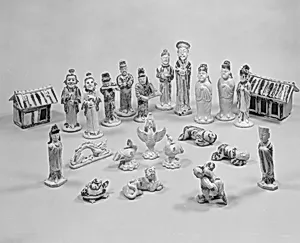
This delicate stoneware *Model of Dragon* hails from China's Yuan dynasty (12711368), a fascinating era when Mongol rulers governed a vast empire that blended nomadic influences with enduring Chinese traditions. Classified as tomb pottery, this small figurine—standing just 2⅞ inches (7.3 cm) high and stretching 6⅝ inches (16.8 cm) long—was likely crafted to accompany the deceased into the afterlife, embodying protective spirits and symbols of power. In Chinese culture, the dragon reigns supreme as an auspicious emblem of imperial authority, good fortune, and control over natural forces like rain and rivers. Tomb models like this one served practical and spiritual purposes, furnishing the tomb with miniature guardians or mythical creatures to ensure harmony in the next world. The use of stoneware, fired at high temperatures for exceptional durability, highlights advanced ceramic techniques that made these pieces resilient for eternity. Today, this anonymous masterpiece graces the Metropolitan Museum of Art's Asian Art collection, gifted from the Charlotte C. and John C. Weber Collection in 1994. It offers a window into Yuan artistry, where everyday burial customs intertwined with profound symbolism, inviting us to ponder the dragon's timeless roar across centuries.