
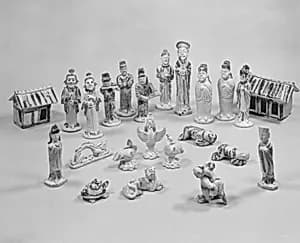
Model of Goose
Unknown Artist
Medium
Stoneware
Dimensions
H. 4 3/16 in. (10.6 cm); W. 3 3/8 in. (8.6 cm)
Classification
Tomb Pottery
Culture & Period
China · Yuan dynasty (1271–1368)
Department
Asian Art
Museum
Metropolitan Museum of Art, New York, NY
Credit
Charlotte C. and John C. Weber Collection, Gift of Charlotte C. and John C. Weber, 1994
Accession Number
1994.605.78
Rights
Public Domain
Tags
Art Historical Context
This charming stoneware model of a, standing just over 4 inches tall, hails from China's Yuan dynasty (12711368), a period by Mongol rule yet rich in traditional Chinese artistry. Crafted as tomb pottery—known as *mingqi*—such small figurines were placed in burials to accompany the deceased into the afterlife, providing companionship, sustenance, or symbolic protection. Geese, often depicted in these models, evoked domestic life, loyalty, and the rhythms of rural existence, bridging the mortal world with the eternal. The unknown artist's skillful modeling captures the bird's alert posture and plump form with naturalistic detail, typical of Yuan stoneware techniques that emphasized earthy tones and subtle textures from high-fired clay. Though unglazed specifics are unnoted, the medium's durability suited tomb environments. Part of the Metropolitan Museum of Art's Asian Art collection, gifted by Charlotte C. and John C. Weber in 1994, this piece invites us to ponder everyday symbols in funerary ritual—reminding visitors of ancient beliefs in continuity beyond death. (178 words)