
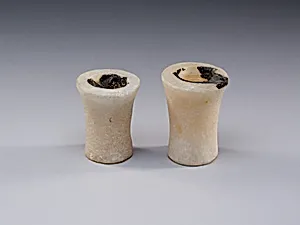
Model Ointment Jar from a Foundation Deposit
Unknown Artist
ca. 1479–1458 B.C.
Medium
Travertine (Egyptian alabaster)
Dimensions
l. 5.5 cm (2 3/16 in.)
Classification
Ointment jar, model, Senenmut
Period
New Kingdom
Department
Egyptian Art
Museum
Metropolitan Museum of Art, New York, NY
Credit
Rogers Fund, 1927
Accession Number
27.3.496
Rights
Public Domain
Art Historical Context
This delicate model ointment jar, crafted around 1479–1458 B.C. during Egypt's New Kingdom (Dynasty 18), exemplifies the ritual precision of ancient Egyptian foundation deposits. These tiny artifacts—often no larger than a modern lipstick tube—were ritually buried beneath temple or palace foundations to symbolically provision the structure for eternity. Measuring just 5.5 cm long, this jar mimics a real vessel for precious ointments used in religious ceremonies, ensuring divine favor and prosperity for the building above. Carved from travertine, known as Egyptian alabaster, the jar showcases the stone's signature translucence and creamy glow, prized for its softness that allowed intricate hollowing and polishing. Artisans in this golden age of pharaonic power, under rulers like Hatshepsut and Thutmose III, perfected such miniatures with flawless symmetry, reflecting mastery over material and symbolism. Though small, its survival speaks to the enduring reverence for these deposits, unearthed and preserved through the Rogers Fund in 1927 at The Metropolitan Museum of Art. In Egyptian belief, these models blurred the line between earthly and divine realms, a poignant reminder of how ancient builders invoked magic through art. Visitors, imagine the quiet ceremony as priests sealed this jar away— a timeless gesture of hope.