
Model voor een beugel van een klamp en een boekslot met bloemen binnen rococo-ornament
c. 1750 - c. 1775
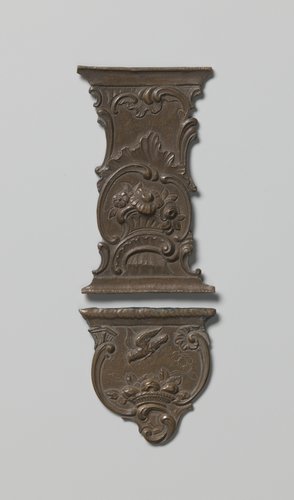
Medium
copper (metal)
Dimensions
7.4; 2.8
Rights
Public Domain
About this artwork
width 2.8 cm x length 7.4 cm
Art Historical Context
This delicate copper model, created anonymously around 1750–1775, a design for a bracket from a clamp and a book adorned with intricate floral motifs within rococo ornamentation. Measuring just 2.8 cm wide by 7.4 cm long, it exemplifies the exquisite metalworking traditions of the 18th Netherlands, where such small-scale models served as prototypes for casting or engraving functional hardware. The rococo style, flourishing across Europe during this Rococo era, is vividly captured here in its playful asymmetry and naturalistic flowers curling within ornate frames. Emerging as a lighter, more whimsical evolution from Baroque grandeur, rococo influenced everything from architecture to everyday objects, blending artistry with utility. In Dutch workshops, artisans adapted French-inspired designs to local tastes, elevating book clasps—essential for securing valuable volumes in an age of expanding libraries—into miniature jewels. As a testament to applied arts, this piece highlights how rococo democratized luxury, making opulent decoration accessible beyond palaces. Though anonymous, it reflects the skilled craftsmanship of unnamed goldsmiths and silversmiths, offering visitors a glimpse into the harmonious fusion of beauty and practicality in Enlightenment-era Europe.
About the Artist
anonymous
In the vast tapestry of art history, "Anonymous" stands not as a singular individual but as a collective designation for countless unidentified creators whose works have endured across millennia. These artists, spanning prehistoric cave painters to medieval illuminators and folk craftsmen, produced the foundational layers of human visual culture. Prior to the Renaissance, when individual fame emer...