
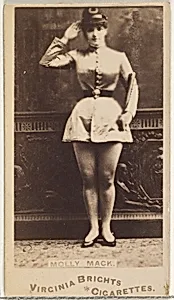
Molly Mack, from the Actors and Actresses series (N45, Type 1) for Virginia Brights Cigarettes
ca. 1888
Medium
Albumen photograph
Dimensions
Sheet: 2 3/4 x 1 3/8 in. (7 x 3.5 cm)
Classification
Photographs|Ephemera
Department
Drawings and Prints
Museum
Metropolitan Museum of Art, New York, NY
Credit
The Jefferson R. Burdick Collection, Gift of Jefferson R. Burdick
Accession Number
63.350.203.45.317
Rights
Public Domain
Tags
Art Historical Context
Step into the vibrant world of 19th-century celebrity culture with *Molly Mack, from the and Actresses series (45, Type 1, issued by the pioneering tobacco firm Allen & G around 1888. petite albumen photograph, measuring just 2 3/4 x 1 3/8 inches, captures the poised likeness of actress Molly Mack, of many performers featured in this popular series. Tucked into packs of Virginia Brights Cig, these cards transformed everyday smoking into a collecting frenzy, blending portraiture with clever marketing. Allen & Ginter, innovative lithographers and tobacco magnates, revolutionized ephemera by producing chromolithographed cards from photographic originals, like this detailed albumen print known for its rich tonal range and sharp clarity—a hallmark of mid-to-late 19th-century photography. The Actors and Actresses series celebrated the era's theater stars, reflecting America's growing fascination with vaudeville and stage luminaries amid rapid urbanization and mass entertainment. Housed in The Metropolitan Museum of Art's Jefferson R. Burdick Collection, this tiny treasure highlights how commercial printing democratized portraiture, turning actresses into household names and foreshadowing modern trading cards. A snapshot of Gilded Age commerce and culture, it invites us to ponder fame's fleeting yet collectible allure.
About the Artist
Allen & Ginter
Allen & Ginter, the pioneering American tobacco firm based in Richmond, Virginia, emerged around 1880 from the partnership of John F. Allen and Lewis Ginter, evolving from Allen's earlier John F. Allen & Company. Allen retired in 1882, succeeded by John Pope, yet the brand endured under Ginter's leadership, employing over 1,100 workers—mostly women—for hand-rolled cigarettes by 1886. Ginter, a Dut...