
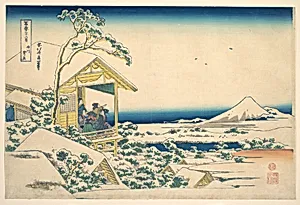
冨嶽三十六景 礫川雪の旦|Morning after the Snow at Koishikawa in Edo (Koishikawa yuki no ashita), from the series Thirty-six Views of Mount Fuji (Fugaku sanjūrokkei)
ca. 1830–32
Medium
Woodblock print; ink and color on paper
Dimensions
10 x 15 in. (25.4 x 38.1 cm)
Classification
Prints
Culture & Period
Japan · Edo period (1615–1868)
Department
Asian Art
Museum
Metropolitan Museum of Art, New York, NY
Credit
The Howard Mansfield Collection, Purchase, Rogers Fund, 1936
Accession Number
JP2555
Rights
Public Domain
Tags
Art Historical Context
Katsushika Hokusai's *Morning after the Snow at Koishikawa in Edo*, created around 1830–32, is a stunning woodblock print from his iconic series *Thirty-six Views of Mount Fuji*. During Japan's Edo period (16151868), ukiyo-e artists like Hokusai captured the fleeting beauty of everyday life and nature in affordable prints for the masses. Here, a serene winter scene unfolds in the Koishikawa district of Edo (modern Tokyo): snow blankets thatched roofs and tea houses, while Mount Fuji looms majestically in the distance, its peak piercing a pale blue sky. Tiny figures—perhaps travelers or locals—add a human touch to the tranquil landscape. Hokusai, then in his seventies, revolutionized printmaking with bold compositions, innovative perspectives, and vibrant colors achieved through layered woodblocks and pigments like Prussian blue. This medium's accessibility made art democratic, influencing global artists from Van Gogh to Whistler. The print's crisp lines and subtle gradations evoke the crisp hush of fresh snow, highlighting Fuji's spiritual allure in Japanese culture as a sacred symbol of endurance. A gem from the Metropolitan Museum of Art's Asian Art collection, it invites you to pause and appreciate nature's quiet poetry.
About the Artist
Katsushika Hokusai · 1760–1849
Katsushika Hokusai (1760-1849) stands as one of history's most influential artists, a Japanese master who revolutionized the ukiyo-e woodblock print tradition and profoundly shaped Western art. Born in the Katsushika district of Edo (modern-day Tokyo) to an artisan family, Hokusai lived through nearly nine decades of extraordinary creative evolution, adopting over thirty different artistic names t...