
Mortar
Unknown Artist
14th century
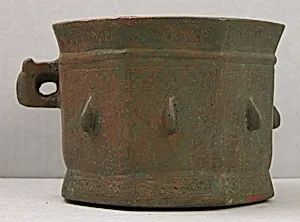
Medium
Bronze; chiseled, applied decoration, originally gilted
Dimensions
H. 4 1/4 in. (10.8 cm) Diam. 5 5/8 in. (14.3 cm)
Classification
Metal
Department
Islamic Art
Museum
Metropolitan Museum of Art, New York, NY
Credit
Bequest of W. Gedney Beatty, 1941
Accession Number
41.160.199
Rights
Public Domain
Art Historical Context
This exquisite 14th-century bronze mortar, standing just 4¼ inches tall and 5⅝ inches in diameter, exemplifies the masterful metalworking traditions of the Islamic world.ed by an unknown artist, it served a practical purpose—likely grinding spices, herbs, or medicines in a household or apothecary setting—yet its refined decoration transforms it into a work of art. Originally gilded, the surface would have gleamed with golden luster, highlighting its dual role as functional object and status symbol. The mortar's surface bears intricate chiseled designs and applied decorations, techniques that reveal the artisan's skill in manipulating bronze. Chiseling involved incising fine patterns with specialized tools, while applied elements—possibly repoussé motifs or filigree—added texture and depth. These methods were hallmarks of Islamic metalwork, blending utility with aesthetic sophistication during a golden age of craftsmanship from the medieval Near East to Central Asia. Housed in the Metropolitan Museum of Art's Islamic Art Department through the bequest of W. Gedney Beatty in 1941, this mortar invites visitors to ponder everyday life in the 14th century. It underscores how Islamic artisans elevated domestic wares, preserving cultural heritage through enduring bronze forms that whisper stories of trade, innovation, and artistry.