
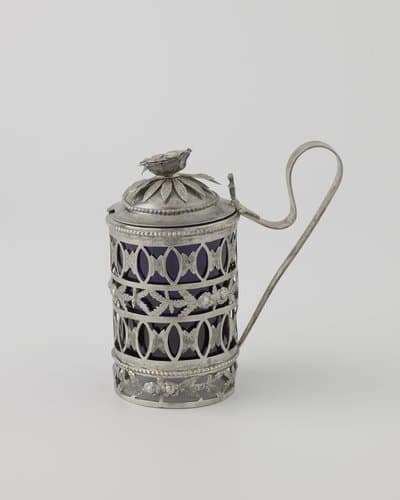
Mosterdpot van zilver, rond, met vier opengewerkte randen. Binnenbak van blauw glas.
ca. 1780 - ca. 1800
Medium
silver (metal)
Dimensions
12; 252; 6.4
Rights
Public Domain
About this artwork
stadskeur: ‘Utrecht’
Art Historical Context
This elegant silver mustard pot, crafted around 1780–1800, exemplifies the refined silversmithing traditions of Utrecht, Netherlands. at 12 cm tall with a 6.4 cm diameter weighing 252 grams, its round form features four delicately openworked edges—pierced silver motifs that allow light to play through, creating a luminous effect. The blue glass inner liner not only protected the silver from the corrosive mustard but also added a vibrant pop of color, blending functionality with subtle luxury. Bearing the Utrecht city mark (stadskeur), this piece was assayed and approved by the local guild, ensuring high standards of purity and craftsmanship during the late 18th century. This era marked a transition in Dutch silverwork from ornate Rococo to emerging Neoclassical restraint, where such pots served as status symbols on affluent dining tables. Mustard pots like this were essential for serving the pungent condiment popular in European cuisine, reflecting everyday opulence in prosperous merchant homes. Today, it offers a glimpse into Utrecht's vibrant silversmithing heritage, where anonymous artisans produced heirloom-quality items blending technical precision with decorative flair. A testament to enduring design, it invites us to appreciate the artistry in the utilitarian.
About the Artist
anonymous
In the vast tapestry of art history, "Anonymous" stands not as a singular individual but as a collective designation for countless unidentified creators whose works have endured across millennia. These artists, spanning prehistoric cave painters to medieval illuminators and folk craftsmen, produced the foundational layers of human visual culture. Prior to the Renaissance, when individual fame emer...