
Mummy Mask
Unknown Artist
A.D. 60–70
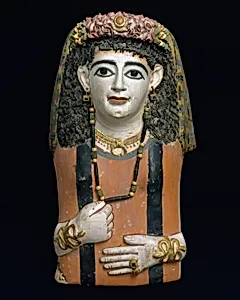
Medium
Cartonnage, plaster, paint, plant fibers
Dimensions
l. 63 cm (24 13/16 in); w. 33 cm (13 in); h. 53 (20 7/8 in)
Classification
Mask, cartonnage, woman
Period
Roman Period
Department
Egyptian Art
Museum
Metropolitan Museum of Art, New York, NY
Credit
Rogers Fund, 1919
Accession Number
19.2.6
Rights
Public Domain
Tags
Art Historical Context
This striking Mummy Mask, crafted around A.D. 60–70 during Egypt's Roman Period, once adorned the face of a deceased woman, serving as a protective and idealized portrait for her journey into the afterlife. Made from cartonnage—a technique involving layers of linen or plant fibers soaked in plaster, then meticulously painted—it measures about 63 cm long and captures the era's fusion of traditional Egyptian funerary practices with Roman realism. Acquired through the Rogers Fund in 1919, it now graces the Egyptian Art department at the Metropolitan Museum of ArtThe mask's vibrant paints, applied over the molded plaster, highlight finely detailed features like large eyes and elaborate wigs, evoking a youthful, eternal beauty symbolic of rebirth. In Roman Egypt, such masks reflected evolving beliefs: while rooted in pharaonic traditions of preserving the ka (life force), they incorporated Greco-Roman portrait styles, making the deceased appear lifelike yet divine. This artifact offers a poignant glimpse into daily life and death rituals under Roman rule, where women were often depicted with jewelry and cosmetics to ensure favor in the underworld. Though the artist remains unknown, the mask's craftsmanship underscores the skill of Ptolemaic-Roman workshops, blending utility with artistry in one of antiquity's most intimate objects.