
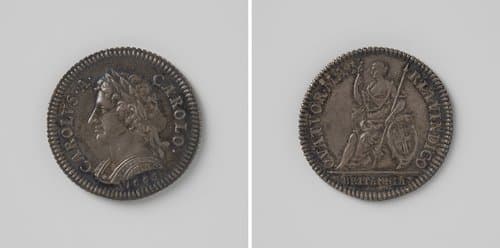
Munt van een halve shilling van Karel II van Engeland
1665
Medium
striking (metalworking)
Dimensions
2.4; 6.4
Rights
Public Domain
About this artwork
diameter 2,4 cm x gewicht 6,4 gr
Art Historical Context
Behold the *Munt van een halve shilling van Karel II van Engeland* (Half Shilling of Charles II of England), exquisite silver coin crafted in 1665 by master engraver Jean Roëiers. Measuring just 2.4 cm in diameter and weighing 6.4 grams, this delicate piece exemplifies the precision of 17th-century numismatic art. Roëttiers, chief engraver at the Royal, brought his renowned skill to bear during the Restoration era, creating coins that blended portraiture with royal symbolism. Struck during Charles II's reign (1660–1685), this half shilling reflects the monarchy's resurgence after the English Civil War and Commonwealth interlude. Charles II, the "Merry Monarch," commissioned elegant designs to assert Stuart legitimacy, often featuring his laureled bust on the obverse and heraldic arms on the reverse. As everyday currency, such coins circulated widely, embodying economic stability and artistic refinement amid post-plague London. The striking technique—hammering or pressing dies into silver blanks—demanded extraordinary craftsmanship to achieve fine details on a tiny scale. Roëttiers' work influenced baroque coinage across Europe, turning functional money into miniature masterpieces. A testament to Restoration opulence, this coin invites us to ponder how even pocket change carried the weight of history.