
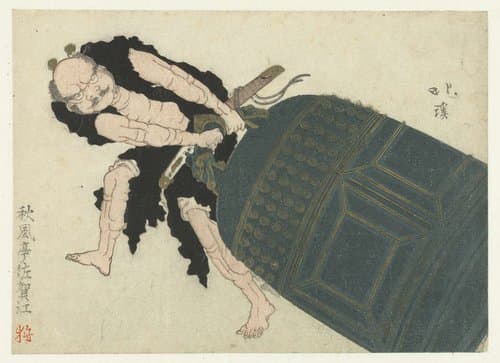
Musashibô Benkei sleept met een grote tempelklok
ca. 1810 - ca. 1820
Medium
nishikie, with metallic pigments and blindprinting
Dimensions
141; 192
Rights
Public Domain
About this artwork
collector's mark, verso, stamped
Art Historical Context
**Musashibô Benkeiags a Large Temple Bell by Totoya Hokkeica. 1810–1820) captures a legendary feat from Japanese folklore. Hokkei, a prominent ukiyo-e artist pupil of Katsushika Hokusai, depicts the mighty warrior monk Musashib Benkei—famed companion of the samurai Minamoto no Yoshits—hauling an enormous temple bell on his back. This dynamic scene draws from tales popularized in kabuki theater and epic narratives like *Heike Monogatari*, symbolizing Benkei's superhuman strength and loyalty during the turbulent Kamakura period. Printed as a *nishikie* (brocade picture) woodblock, this intimate work measures just 141 × 192 mm, typical of *surimono*—luxurious, privately commissioned prints for New Year's greetings or collectors. Hokkei enhances its vibrancy with metallic pigments for shimmering effects and blindprinting (gauffrage) for subtle embossed textures, evoking the bell's gleaming bronze and Benkei's muscular exertion. A collector's mark stamped on the verso underscores its status as a prized personal item among Edo-period connoisseurs. This print exemplifies late Edo ukiyo-e's blend of storytelling and technical innovation, bridging folklore with accessible art. Visitors will appreciate how Hokkei's precise lines and rich colors bring Benkei's mythic power to life in a format small enough for a sleeve or album.
About the Artist
Totoya Hokkei · 1780–1850
Totoya Hokkei (魚屋 北渓, 1780–1850), born Iwakubo Tatsuyuki in Edo (modern Tokyo), began his life as a humble fishmonger in the Yotsuya Samegahashi district, a trade reflected in his art name "Totoya," meaning fish shop. He transitioned to art through rigorous training, first studying under Kanō Yōsen'in Korenobu, head of the Kobikichō branch of the prestigious Kanō school, where he honed landscape p...