
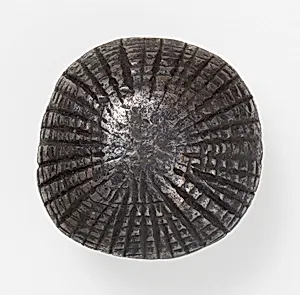
Nail
Unknown Artist
15th–16th century
Medium
Iron
Dimensions
Overall: 2 1/2 x 4 in. (6.4 x 10.2 cm)
Classification
Metalwork-Iron
Culture
European
Department
The Cloisters
Museum
Metropolitan Museum of Art, New York, NY
Credit
The Cloisters Collection, 1955
Accession Number
55.61.133
Rights
Public Domain
Art Historical Context
This unassuming iron nail, forged in Europe during the 15th 16th century, a glimpse into the everyday craftsmanship of the late medieval and early Renaissance periods. Measuring just 2½ x 4 inches (6.4 x 10.2 cm), it exemplifies hand-forged metalwork produced by skilled blacksmiths using basic tools like hammers and anvils over charcoal fires. Its simple, sturdy form—with a tapered square shank and broad head—reflects the practical engineering of the era, designed to secure timber frames in homes, ships, bridges, and grand cathedrals. Housed in The Cloisters, the Metropolitan Museum of Art's medieval treasure trove, this artifact highlights the unsung artistry in functional objects. Iron nails like this were essential to Europe's architectural boom, from Gothic spires to emerging Renaissance structures, symbolizing the blacksmith's vital role in society. Unlike modern machine-cut nails, these were laboriously shaped by hand, showcasing techniques passed down through guilds and revealing the material's durability against rust and wear. Though created by an unknown artisan, this nail invites us to appreciate the "minor arts" that built civilizations—reminding visitors that even the humblest tools carry the weight of history. (198 words)