
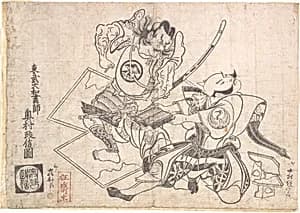
Nakamura Denkuro as Asaina no Saburo and Nakajima Kanzaemon as Soga no Gorō, Acting Out the Torn Armor Scene (Kusazuri-biki) in a Soga Play
ca. 1709
Medium
Woodblock print; ink and color on paper
Dimensions
10 3/8 x 14 3/4 in. (26.4 x 37.5 cm)
Classification
Prints
Culture & Period
Japan · Edo period (1615–1868)
Department
Asian Art
Museum
Metropolitan Museum of Art, New York, NY
Credit
Rogers Fund, 1918
Accession Number
JP539
Rights
Public Domain
Tags
Art Historical Context
Step into the vibrant world of Edo-period Japan with this captivating woodblock print by Okumura Masan, created around 1709. Titled *Nakamura Denkuro asaina no Saburo andajima Kanzaemon asoga no Gorō, Out the Torn Armor SceneKusazuri-biki) in a Soga*, it measures 10 3/8 x 14 3/4 inches and showcases two kabuki actors in a tense moment from a classic revenge tale. Nakamura Denkuro, dressed as the warrior Asaina no Saburo, grapples dramatically with Nakajima Kanzaemon as the fierce Soga no Gorō, their swords drawn amid flowing robes and exaggerated poses that capture the theater's high energy. Masanobu, a pioneering figure in ukiyo-e (pictures of the floating world), immortalized star performers like these in his prints, making kabuki accessible beyond the stage. The Soga brothers' story—rooted in 12th-century legend and a staple of kabuki since the 17th century—dramatizes filial loyalty and vengeance, with the "torn armor" scene symbolizing raw combat. Printed with ink and color on paper, this work highlights early woodblock techniques that brought bold hues and dynamic composition to everyday viewers during the prosperous Edo period (1615–1868). Housed in the Metropolitan Museum of Art's Asian Art Department (Rogers Fund, 1918), it offers a window into Japan's theatrical golden age, where actors were celebrities and prints like this fueled fan culture. A true gem for lovers of drama and artistry!
About the Artist
Okumura Masanobu · 1686–1764
Japanese, 1686–1764