
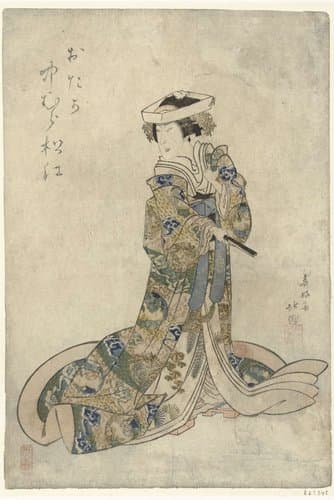
Nakamura Matsue als Otaka
Medium
color woodcut
Dimensions
366; 253
Rights
Public Domain
About this artwork
Gift of F.W.M., Baroness Bonger-van der Borch van Verwolde, Amsterdam
Art Historical Context
Behold the vibrant *Nakamura Matsue als Ot* (1824), a color woodcut by Shunbaisai Hok, a master of Japan's Ukiyo-e tradition. This striking print captures the kabuki actor Nakamura Mats I in the role of Otaka, showcasing the dramatic flair of Edo-period theater. Measuring 366 mm high by 253 mm wide, it exemplifies Hokuei's Osaka-school style, known for its compositions and expressive portraits of performers (*yakusha-e*), blending realism with theatrical exaggeration to bring the "floating world" of entertainment to life. Created through the intricate *nishiki-e* technique—multi-block woodcuts layered with vivid pigments—Hokuei's work highlights collaborative artistry among carvers, printers, and publishers. During the 1820s, amid strict censorship, such prints preserved kabuki's cultural pulse, immortalizing stars like Matsue, a celebrated *onnagata* (female impersonator). The medium's affordability made these images accessible, fueling a print boom that influenced global art. Generously gifted by F.W.M., Baroness Bonger-van der Borch van Verwolde of Amsterdam, this piece bridges Japanese heritage with European collections, inviting us to appreciate theater's timeless allure. (198 words)
About the Artist
Shunbaisai Hokuei · 1200–2100
Shunbaisai Hokuei (d. 1837), also known as Shunkō III, was a Japanese ukiyo-e artist who became the culminating figure of Osaka kabuki printmaking during the late Edo period. Born in Osaka, Hokuei received his artistic training under Shunkōsai Hokushū, eventually becoming a prominent member of the Osaka school. While his exact birth and death dates remain uncertain, he was generally active from ar...