
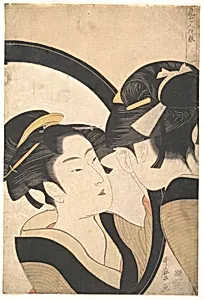
姿見七人化粧|Naniwa Okita Admiring Herself in a Mirror
ca. 1790–95
Medium
Woodblock print; ink and color on paper, mica ground
Dimensions
14 1/2 x 9 7/8 in. (36.8 x 25.1 cm)
Classification
Prints
Culture & Period
Japan · Edo period (1615–1868)
Department
Asian Art
Museum
Metropolitan Museum of Art, New York, NY
Credit
Harris Brisbane Dick Fund, 1946
Accession Number
JP3018
Rights
Public Domain
Tags
About this artwork
Naniwa Okita Admiring Herself in a Mirror is a prints by Japanese artist Kitagawa Utamaro, created in ca. 1790–95. The work was created using woodblock print; ink and color on paper, mica ground. It measures 14 1/2 x 9 7/8 in. (36.8 x 25.1 cm). This piece represents the artistic traditions of Japan, Edo period (1615–1868), embodying the aesthetic values and technical expertise of its makers. Printmaking during this period was an essential medium for disseminating artistic imagery and ideas acros...
Art Historical Context
In the vibrant world of Edo-period Japan (1615–1868), Kitagawa Utam captured the elegance of everyday beauty in *Naniwa Okita Admiring Herself in a* (ca. 1790–95). This woodblock print depicts a poised woman, likely a courtes from Osaka's Naniwa district, gazing into her reflection with quiet poise. Utamaro, renowned for his intimate portrayals of women, highlights her graceful form and intricate attire, inviting viewers to appreciate the refined aesthetics of urban life during Japan's prosperous era. Crafted as a woodblock print with ink and color on paper over a shimmering mica ground, the work exemplifies the technical mastery of ukiyo-e artists. The mica adds a luxurious, iridescent glow, mimicking the sparkle of cosmetics and lantern light, which enhanced the print's allure. Measuring just 14½ × 9⅞ inches, these affordable prints reached wide audiences, from connoisseurs to commoners, disseminating fashion, beauty ideals, and cultural snapshots. Today, this gem resides in the Metropolitan Museum of Art's Asian Art department, acquired through the Harris Brisbane Dick Fund in 1946. It embodies the Edo period's celebration of femininity and mirrors as symbols of self-admiration, offering a window into Japan's artistic heritage.
About the Artist
Kitagawa Utamaro · 1753–1806
Kitagawa Utamaro (c. 1753-1806) was one of the most celebrated masters of ukiyo-e woodblock printing, revolutionizing the art of bijin-ga (pictures of beautiful women) during Japan's Edo period. Born Kitagawa Ichitaro, his early life remains shrouded in mystery, with conflicting accounts placing his birth in Kyoto, Osaka, Yoshiwara in Edo (modern Tokyo), or Kawagoe in Musashi Province. Under the t...