
Napoleon Bonaparte op St. Helena
1816
Medium
striking (metalworking)
Dimensions
7.7; 1875
Rights
Public Domain
About this artwork
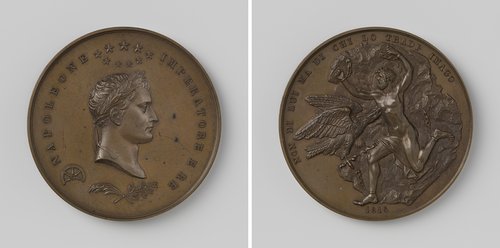
Bronzen penning. Voorzijde: borststuk man met lauwer- en sterrenkrans binnen omschrift boven scheepsroer en samengebonden palm- en olijftak. Keerzijde: man aan rotsen geketend, voorstellende Prometheus, wiens lever door arend wordt uitgerukt binnen omschrift
Art Historical Context
Crafted in 1816 by medallist Zirotti,Napoleon Bonaparte op. Helena* is a bronze medal (7. cm in diameter, weighing 18.75 g) that captures the pathos of Napoleon's exile. The obverse features a bust of fallen emperor adorned with a laurel and star wreath, symbols of victory and imperial glory. Above it, a ship's rudder flanked by bound palm and olive branches evokes naval power, triumph, and peace—ironic emblems for a leader now imprisoned on the remote island of St. Helena after his defeat at Waterloo. The reverse draws on classical mythology, depicting Prometheus chained to rocks as an eagle tears at his liver. This powerful allegory casts Napoleon as the Titan who defied the gods by stealing fire (symbolizing enlightenment and revolution) for humanity, only to endure eternal torment. Produced just a year into his captivity (1815–1821), the medal reflects widespread Romantic sympathy for Napoleon as a tragic hero, blending admiration with lament. Struck in bronze using metalworking techniques typical of early 19th-century numismatics, this small yet intricate piece highlights the era's neoclassical revival. Medals like this served as portable propaganda and personal talismans, preserving Napoleon's legend amid political shifts and fostering cultural reverence for his outsized legacy.