
Nazien van de munt van Harderwijk
Medium
striking (metalworking)
Dimensions
3.8; 29.31
Rights
Public Domain
About this artwork
diameter 3.8 cm x weight 29.31 gr
Art Historical Context
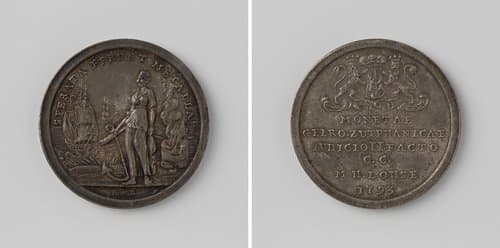
Behold the *Nazien van de munt van Harderwijk* (1793), a finely struck metalwork piece by Dutch artist Marten Hendrik Lohse. Measuring 3.8 cm in diameter and weighing 29.31 grams, this compact medallion exemplifies the precision of late 18th-century numismatic art. Lohse, known for his engraving prowess, crafted it using the striking technique—hammering a prepared die onto a metal blank under immense pressure to imprint intricate designs with remarkable clarity and detail. Created at the height of the Dutch Republic's provincial minting era, this "nazien" (trial strike) hails from Harderwijk's historic mint, one of several regional facilities producing coins amid economic and political flux. Trial pieces like this were essential quality checks, verifying weight, metal purity, and die accuracy before full production. Dating to 1793, it captures a pivotal moment just before the Batavian Revolution centralized Dutch minting, preserving a snapshot of local craftsmanship and autonomy. Artistically, Lohse's work highlights the medallic tradition's blend of sculpture and engraving, where every ridge and contour tells a story of technical mastery. For visitors, it's a tangible link to Enlightenment-era innovation, inviting reflection on how everyday metal became a canvas for history.