
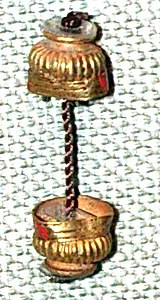
Necklace pendants and beads
Unknown Artist
ca. 18th–17th century BCE
Medium
Gold
Dimensions
1 7/16 in. (3.6 cm)
Classification
Metalwork-Ornaments
Culture & Period
Babylonian · Old Babylonian
Department
Ancient Near Eastern Art
Museum
Metropolitan Museum of Art, New York, NY
Credit
Fletcher Fund, 1947
Accession Number
47.1a10.1, .2
Rights
Public Domain
Art Historical Context
Step into the ancient world of Babylon with these exquisite *Necklace Pendants and Beads*, around the 18th–17th century BCE during the Old Babylonian period. just 1 7/16 inches (3.6 cm), this gold ensemble from the Metropolitan Museum of Art's Ancient Near Eastern Art collection exemplifies the sophistication of Mesopotamian metalwork. Acquired through the Fletcher Fund in 7, these ornaments whisper of a time when Babylon was a thriving hub of culture and power under rulers like Hammurabi. Gold, a precious and rare material in antiquity, held immense symbolic value, signifying wealth, status, and divine favor. Babylonian artisans skillfully hammered and shaped the soft metal into pendants and beads, creating jewelry likely worn by elites for ceremonies, daily adornment, or as protective amulets. Such pieces highlight the advanced techniques of the era, where gold's luster evoked the sun god Shamash, blending artistry with spirituality. These tiny treasures offer a glimpse into Old Babylonian daily life, where personal ornaments bridged the mortal and divine. Though the artist remains unknown, their work endures as a testament to enduring craftsmanship in one of humanity's earliest civilizations.