
Necklet
Unknown Artist
18th century
Medium
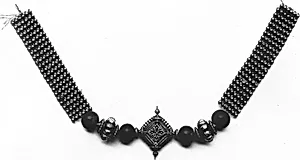
Gold, lacquer beads
Classification
Jewelry
Department
Islamic Art
Museum
Metropolitan Museum of Art, New York, NY
Credit
John Stewart Kennedy Fund, 1915
Accession Number
15.95.63
Rights
Public Domain
Art Historical Context
This exquisite 18th-century necklet, crafted from gold and lacquer beads, exemplifies the refined artistry of Islamic jewelry traditions. Housed in the Metropolitan Museum of Art's Islamic Art department, it was acquired through the John Stewart Kennedy Fund in 1915. As a necklet—a necklace-like adornment—the piece would have been worn as a statement of elegance and status, highlighting the wearer's wealth and cultural sophistication. Gold, a precious metal revered across Islamic cultures for its luster and durability, forms the structural backbone, likely worked with intricate techniques such as filigree or granulation common to the era's goldsmiths. The addition of lacquer beads introduces a striking contrast: lacquer, prized for its glossy finish and vibrant possibilities, was a specialized craft in regions like the Ottoman Empire or Persia, where it protected and enhanced decorative elements. Together, these materials reflect the period's mastery in blending metallurgy with enamel-like finishes, creating lightweight yet opulent accessories. In the 18th century, such jewelry held deep cultural significance, often gifted during weddings or as heirlooms, symbolizing prosperity and protection. Though the artist remains unknown, this necklet invites us to appreciate the anonymous genius of Islamic artisans, whose innovations continue to dazzle modern viewers.