
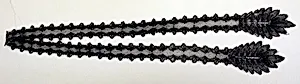
Necktie
Unknown Artist
1860–65
Medium
linen
Classification
Necktie
Culture
European
Department
Costume Institute
Museum
Metropolitan Museum of Art, New York, NY
Credit
Gift of Mrs. Wolcott M. Warner, 1980
Accession Number
1980.197.3
Rights
Public Domain
Art Historical Context
Step into the refined world of 19th-century European menswear this elegant linen necktie, crafted around 1860–65 by an unknown artist. Housed in the Metropolitan Museum of Art's Costume Institute, this piece was generously gifted by Mrs. Wol M. Warner in 1980. Made from fine linen—a lightweight, breathable fabric ideal for everyday wear—it exemplifies the practical yet stylish accessories that defined Victorian-era gentlemen's attire. During the 1860s, neckties were evolving from elaborate cravats into simpler, more versatile knots like the emerging four-in-hand style, reflecting broader shifts toward modernity and mobility in European fashion. Linen's use here highlights its role in summer or informal settings, contrasting with luxurious silks reserved for formal occasions, and underscores the era's attention to subtle class distinctions through textiles. As a snapshot of cultural history, this necktie offers visitors a tangible link to the daily lives of 19th-century Europeans, revealing how even small accessories conveyed identity, status, and craftsmanship in an age of rapid social change.