
Netsuke
Unknown Artist
19th century
Medium
Ivory
Dimensions
H. 1 7/8 in. (4.8 cm)
Classification
Netsuke
Culture & Period
Japan · Edo (1615–1868) or Meiji period (1868–1912)
Department
Asian Art
Museum
Metropolitan Museum of Art, New York, NY
Credit
Gift of Mrs. Russell Sage, 1910
Accession Number
10.211.500
Rights
Public Domain
Tags
Art Historical Context
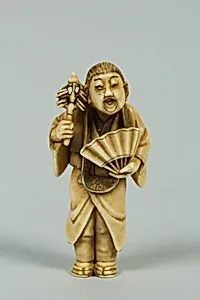
This delicate ivory netsuke, created in Japan during the 19th century, exemplifies the refined craftsmanship of the late Edo (1615–1868) and early Meiji (1868–1912) periods. Originally designed as a practical toggle, it was used to secure small pouches or inro containers to a man’s kimono sash, allowing him to carry personal items without pockets. The compact size—just under two inches high—made these objects ideal for intricate carving while remaining functional accessories in daily life. Carved from ivory, a material prized for its smooth texture and ability to hold fine detail, this netsuke likely depicts a male figure accompanied by fans, motifs that often symbolized elegance, status, or theatrical themes in Japanese art. Such pieces were frequently produced by anonymous artisans who specialized in miniature sculpture, blending utility with artistic expression. As Japan modernized in the Meiji era, demand for netsuke shifted from everyday use to export and collecting, preserving these tiny treasures as emblems of traditional craftsmanship. Today in the Metropolitan Museum’s collection, this work highlights the cultural significance of personal adornment in Japanese society and the enduring appeal of its miniature art forms.