
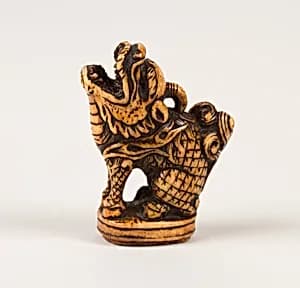
Netsuke and Seal in form of a Qilin
Unknown Artist
19th century
Medium
Ivory
Dimensions
H. 2 1/2 in. (6.4 cm); W. 2 in. (5.1 cm); D. 1 in. (2.5 cm)
Classification
Netsuke
Culture & Period
Japan · Edo (1615–1868) or Meiji period (1868–1912)
Department
Asian Art
Museum
Metropolitan Museum of Art, New York, NY
Credit
Gift of Mrs. Russell Sage, 1910
Accession Number
10.211.1137
Rights
Public Domain
Tags
Art Historical Context
This exquisite netsuke and seal, carved in the form of a qilin—a mythical creature blending dragon, deer, and lion features—dates to 19th-century Japan, from the late Edo (1615–1868) or early Meiji (1868–1912) period. just 2½ inches tall, its compact ivory form showcases the masterful precision of Japanese artisans, who transformed elephant ivory into wearable art. Netsuke like this served a practical purpose: as toggles securing inro (small lacquered boxes for medicines or tobacco) to a kimono sash, while doubling as personal seals for authentication. The qilin (known as kirin in Japan) symbolizes good fortune, longevity, and benevolent rule, drawing from East Asian folklore where it heralds prosperous eras. Carved with intricate details—flowing mane, scales, and hooves—the piece reflects the Edo-Meiji era's blend of functionality and fantasy, when netsuke evolved from utilitarian objects into coveted collectibles. Ivory's creamy translucency allowed for delicate undercutting and lifelike textures, techniques that highlight the anonymous artist's skill in capturing motion and myth in miniature. A gift to the Metropolitan Museum of Art in 1910 from Mrs. Russell Sage, this treasure invites visitors to ponder Japan's rich tradition of pocket sculpture, bridging everyday life with legendary symbolism.