
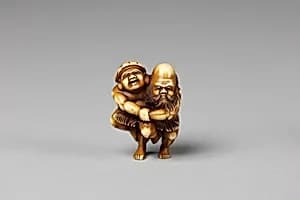
Netsuke of Daikoku and Fukurokuji
Unknown Artist
19th century
Medium
Ivory
Dimensions
H. 1 5/8 in. (4.1 cm)
Classification
Netsuke
Culture & Period
Japan · Edo (1615–1868) or Meiji period (1868–1912)
Department
Asian Art
Museum
Metropolitan Museum of Art, New York, NY
Credit
Gift of Mrs. Russell Sage, 1910
Accession Number
10.211.429
Rights
Public Domain
Tags
Art Historical Context
This delightful ivory netsuke, carved in 19th-century Japan during the late Edo (1615–1868) or early Me (1868–1912) period, captures the Lucky Gods Daikoku and Fukurouju in a compact, playful scene. Standing just 1 5/8 inches (4.1 cm) tall, it exemplifies the exquisite miniature artistry of netsuke—small toggles worn on traditional kimono sashes to secure inro pouches, blending functionality with whimsy. Daikoku, the god of wealth and prosperity, is often depicted with his magical wish-granting mallet (though stylized here), while the elongated-headed Fukurokuju embodies happiness, longevity, and wisdom. Carved from ivory, the piece showcases the netsuke artisan's mastery of fine detailing, incised textures for robes and features, and a smooth, tactile surface that invites handling. These carvings were status symbols for samurai and merchants, embodying Shinto-Buddhist folklore and good fortune in everyday life. A gift to the Metropolitan Museum of Art from Mrs. Russell Sage in 1910, this netsuke highlights Japan's rich tradition of portable art, bridging utility and spirituality for modern admirers.