
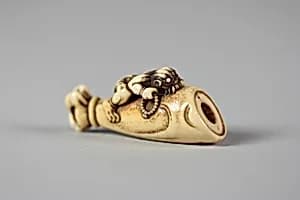
Netsuke of Hand and Forearm of a Demon with Small Demon on the Side
Unknown Artist
19th century
Medium
Ivory
Dimensions
H. 2 1/4 in. (5.7 cm)
Classification
Netsuke
Culture & Period
Japan · Edo (1615–1868) or Meiji period (1868–1912)
Department
Asian Art
Museum
Metropolitan Museum of Art, New York, NY
Credit
Gift of Mrs. Russell Sage, 1910
Accession Number
10.211.557
Rights
Public Domain
Tags
Art Historical Context
This delightful netsuke, carved from ivory in 19th Japan during the late Edo (1615–1868) or early Me (1868–1912) period, captures a whimsical yet eerie scene: the muscular hand and forearm of a clutching a tiny demon figure on its side. Measuring just 2¼ inches (5.7 cm) high, these miniature sculptures were essential accessories in traditional Japanese attire. Worn as toggles on inro (small lacquered boxes) suspended from kimono sashes—since kimonos lack pockets—netsuke combined functionality with artistry, showcasing the wearer's taste and status. The unknown artist's mastery of ivory is evident in the intricate detailing: the demon's gnarled claws, textured skin, and expressive features evoke Japan's rich yokai folklore, where demons (oni) embody mischief, power, and the supernatural. Ivory's creamy translucency and fine grain allowed for such precise undercutting and polishing, techniques that brought these fantastical beings to life in three dimensions. Netsuke like this proliferated as a folk art form, blending humor and horror. A gift to the Metropolitan Museum of Art from Mrs. Russell Sage in 1910, this piece highlights the global fascination with Japanese craftsmanship during the West's Japonisme craze. It invites visitors to ponder the playful demons of Edo-Meiji imagination, frozen in ivory for eternity.