
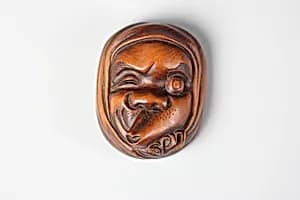
Netsuke of Noh Mask: One-Eyed Hyottoko
Unknown Artist
19th century
Medium
Wood
Dimensions
H. 2 in. (5.1 cm); W. 1 5/8 in. (4.1 cm); D. 3/4 in. (1.9 cm)
Classification
Netsuke
Culture & Period
Japan · Edo (1615–1868) or Meiji period (1868–1912)
Department
Asian Art
Museum
Metropolitan Museum of Art, New York, NY
Credit
Edward C. Moore Collection, Bequest of Edward C. Moore, 1891
Accession Number
91.1.1059
Rights
Public Domain
Tags
Art Historical Context
Nestled in the Metropolitan Museum of Art's Asian Art collection, this exquisite wooden netsuke depicts a Noh mask of the one-eyed Hyott, a whimsical character from Japanese folklore and theater. Carved in the 19th century Japan's Edo (1615–1868) or Meiji (1868–1912) period, the sculpture measures just 2 inches high, showcasing the artist's mastery of miniature wood carving. Its compact form—complete with a single bulging eye, crooked mouth, and textured hair—captures the exaggerated expressiveness of traditional Noh masks, evoking both humor and theatrical drama. Netsuke originated as practical toggles to secure inro pouches to kimono sashes, evolving into coveted art objects prized for their intricate detail and portability. Crafted from wood, this piece exemplifies the technical prowess of unnamed artisans who hollowed small himotoshi holes for cords while rendering lifelike features through subtle undercutting and polishing. Hyottoko, with his lopsided grin symbolizing joy or absurdity, appears in festivals and Noh performances, blending comedy with cultural reverence. Part of the Edward C. Moore Collection bequeathed in 1891, this netsuke bridges everyday utility and high art, offering a window into Japan's rich performative traditions. Visitors will delight in its tactile charm, a testament to the enduring appeal of Edo-Meiji craftsmanship.