
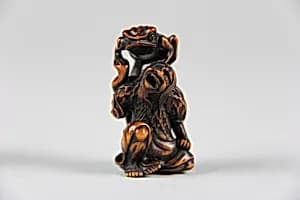
Netsuke of The Daoist Immortal, Gama Sennin with Frog
19th century
Medium
Wood
Dimensions
H. 2 in. (5.1 cm)
Classification
Netsuke
Culture & Period
Japan · Edo (1615–1868) or Meiji period (1868–1912)
Department
Asian Art
Museum
Metropolitan Museum of Art, New York, NY
Credit
Gift of Mrs. Russell Sage, 1910
Accession Number
10.211.1894
Rights
Public Domain
Tags
Art Historical Context
Nestled in the Metropolitan Museum of Art's Asian Art collection, this exquisite wooden netsuke, carved by the skilled 19th-century Japanese artist Toyomasa, depicts Gama Sennin, the legendary Daoist immortal known as the Toad Sage. Standing just 2 inches (5.1 cm) tall, the sculpture captures Gama Sennin cradling a frog, a nod to his mythical association with toads, which symbolize longevity, transformation, and magical elixirs of immortality in Daoist lore. Dating to the late Edo period (1615–1868) or early Meiji era (1868–1912), it reflects Japan's vibrant fusion of indigenous craftsmanship with imported Chinese spiritual traditions. Netsuke like this one were more than mere ornaments; they served as practical toggles to secure inro pouches to kimono sashes, blending utility with artistry. Toyomasa's mastery shines in the wood's fine grain, where every wrinkle on Gama's skin, the frog's textured body, and subtle facial expressions reveal expert himotoshi (cord holes) and intricate detailing achievable only through patient carving techniques. Popular among Edo merchants and samurai, these pocket-sized wonders elevated everyday objects into symbols of refined taste. A gift to the Met from Mrs. Russell Sage in 1910, this piece invites visitors to ponder Daoism's enduring influence on Japanese folklore—where a humble frog becomes a portal to eternal wisdom.