
Numazu, section of sheet no. 3 from the series "Cutout Pictures of the Tokaido (Tokaido harimaze zue)"
c. 1848/52
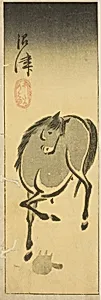
Medium
Color woodblock print; section of harimaze sheet (uncut sheet: 1939.1291)
Dimensions
20.5 × 7.3 cm (8 1/8 × 2 7/8 in.)
Classification
woodblock print
Department
Arts of Asia
Museum
Art Institute of Chicago
Accession Number
33474
Rights
Public Domain
Art Historical Context
Utagawa Hiroshige a master of the ukiyo-e wood print tradition, captures the scenic beauty of Numazu in this charming section from sheet no. 3 of his series *Cutout Pictures of Tōkaidō (Tōkaidō harimaze zue)*, created around 1848–52. The Tōkaidō was the vital coastal highway linking Edo (modern Tokyo) to Kyoto, immortalized in Hiroshige's iconic landscapes. This print depicts the 22nd station, Numazu, known for its coastal views and bustling post town, rendered with Hiroshige's signature atmospheric perspective and subtle color gradients that evoke misty mountains and serene waters. Unique to this series is the *harimaze* format—irregularly shaped panels printed on a single uncut sheet (here, from 1939.1291), designed to be snipped apart into collectible, postcard-sized souvenirs. Measuring just 20.5 × 7.3 cm, this color woodblock print exemplifies the ingenuity of Edo-period printing techniques, where carvers and printers layered vibrant hues using water-based pigments for a luminous effect. Hiroshige's work not only documented Japan's travel culture during a time of growing domestic tourism but also influenced global artists like Van Gogh. On view in the Art Institute of Chicago's Arts of Asia department, this piece invites visitors to appreciate the fleeting beauty of everyday journeys in 19th-century Japan.
About the Artist
Utagawa Hiroshige · 1826–1869
Utagawa Hiroshige (1797–1858), born Andō Tokutarō, was the last great master of Japanese ukiyo-e woodblock printmaking and one of the most influential landscape artists in history. Born in Edo (modern Tokyo) into a low-ranking samurai family serving as fire wardens, Hiroshige transformed landscape printmaking into a poetic meditation on nature, weather, and everyday life. His revolutionary approac...