
One of a Group of Bone Ornaments
Unknown Artist
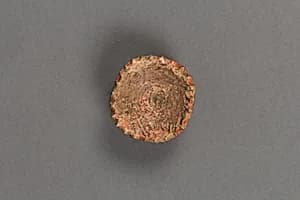
Medium
Bone, vertebrae, claw
Dimensions
H. 5/8 in. (1.6 cm); Diam. 1 1/4 in. (3.2 cm)
Classification
Bone
Culture & Period
Japan · Final Jōmon period (ca. 1000–300 B.C.)
Department
Asian Art
Museum
Metropolitan Museum of Art, New York, NY
Credit
The Harry G. C. Packard Collection of Asian Art, Gift of Harry G. C. Packard, and Purchase, Fletcher, Rogers, Harris Brisbane Dick, and Louis V. Bell Funds, Joseph Pulitzer Bequest, and The Annenberg Fund Inc. Gift, 1975
Accession Number
1975.268.272
Rights
Public Domain
Art Historical Context
This delicate bone ornament, one of a group from Japan's Final Jōmon periodca. 1000– B.C.), showcases the ingenuity of prehistoric artisans. Crafted from vertebrae and claw—likely sourced from local animals—it measures just 5/8 inch high and 1 1/4 inches in diameter, perfect for personal adornment like necklaces or earrings. Its small scale highlights the Jōmon people's mastery of humble materials, transforming natural bone into functional yet elegant jewelry through careful carving and polishing. The Jōmon culture, spanning over 14,000 years, represents one of the world's longest-lasting hunter-gatherer societies, famous for intricate cord-marked pottery but equally skilled in bonework. In the Final Jōmon phase, as communities faced environmental shifts and population decline, such ornaments likely served social or ritual purposes, symbolizing status, protection, or connection to the natural world. These artifacts reveal a deep aesthetic sensibility, where form followed the bone's organic curves. Housed in the Metropolitan Museum of Art's Asian Art Department, this piece from The Harry G. C. Packard Collection invites us to ponder the daily lives of ancient Japanese forebears—resourceful creators who adorned themselves with the very essence of their environment.