
One of a Set of Twelve Chair Strips
Unknown Artist
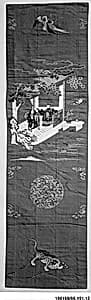
Medium
Silk, metallic thread; on silk
Dimensions
73 1/4 x 20 3/4 in. (186.06 x 52.70 cm)
Classification
Textiles-Embroidered
Culture & Period
China · Qing dynasty (1644–1911), Qianlong period (1736–95)
Department
Asian Art
Museum
Metropolitan Museum of Art, New York, NY
Credit
Gift of Mrs. Henry-George McNeary, 1966
Accession Number
66.191.12
Rights
Public Domain
Tags
Art Historical Context
This exquisite embroidered chair strip, created during China’s Qing dynasty under the Qianlong emperor (1736–95), exemplifies the refined luxury of imperial-era furnishings. Part of a set of twelve, such textiles were designed to drape over the backs or seats of chairs in wealthy households or palace interiors. The Qianlong period marked a golden age of artistic patronage, when intricate embroidery flourished as both a decorative art and a symbol of status. Crafted from silk with metallic thread on a silk ground, the piece showcases the sophisticated techniques of Chinese textile artists. Delicate stitches render lively scenes featuring animals, birds, and human figures—motifs traditionally associated with prosperity, harmony, and auspicious wishes. The use of metallic threads added a subtle shimmer, enhancing the textile’s elegance under candlelight or daylight. As functional yet highly ornamental objects, these chair strips reflect the Qing court’s emphasis on harmonious design and material splendor. Today, this work in the Metropolitan Museum’s collection offers visitors a glimpse into the daily refinement of 18th-century Chinese life.