
Ontwerptekeningen voor de serie gravures "De Macht van de Dood"
Medium
pen
Dimensions
67; 48
Rights
Public Domain
About this artwork
Incompleet: drie ontwerpen in RPK.
Art Historical Context
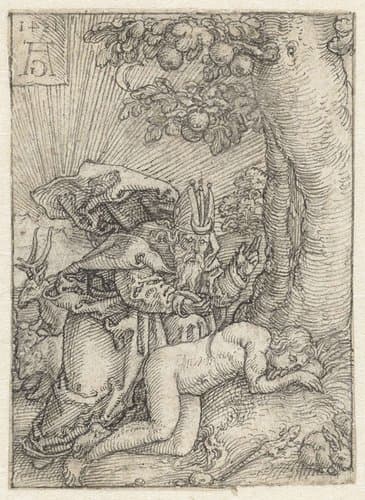
Heinrich Aldegrever, a prominent German engraver and goldsmith of the Northern Renaissance (c. 1502–1555/61), created these delicate *Ontwerptekeningen voor de gravures "De Macht de Dood"* (Design Drawings for the Engraving Series "The Power Death") in 154. Part of the "Little Masters group—artists celebrated for their intricate small-scale works—Aldegrever drew inspiration from Albrecht Dürer and the's fascination with mortality. Amid the 16th-century plagues, religious upheavals of the Reformation, and humanist reflections on life's transience, themes like *memento mori* (remember death) resonated deeply, urging viewers to contemplate the inevitable. Executed in pen on a modest scale (67 × 48 mm), these incomplete sketches—three designs preserved in the Rijksprentenkabinet (RPK) collection—reveal Aldegrever's meticulous preparatory process for his engraving series. Pen allowed for precise lines and fluid shading, essential for translating ideas onto metal plates. Such drawings highlight the technical bridge between Renaissance draftsmanship and printmaking, where fine details would captivate collectors across Europe. Though fragmentary, these works offer a window into Aldegrever's artistry, blending moral allegory with virtuoso technique. They remind us how 16th-century prints democratized profound ideas, making death's power a universal meditation.
About the Artist
Heinrich Aldegrever · 1502–1561
Heinrich Aldegrever, born in 1502 in Paderborn, Westphalia, to parents Herman and Katherine Trippenmeker—a family of clog-makers known by the dialect name Trippenmecker—emerged as a multifaceted artist in the German Renaissance. His early training remains undocumented, though he likely apprenticed in a Soest goldsmith's workshop after relocating there around 1525, where he joined the painters' gui...