
Oosters tapijt
Unknown Artist
1500 - 1700
Medium
wool
Dimensions
500; 228
Rights
Public Domain
About this artwork
…; from Dr Fritz Mannheimer (1890-1939), Amsterdam and Paris, fl. 6,350,000, en bloc, to Artistic & General Securities Ltd. as security for a loan from the Mendelssohn & Co. Bank, but kept in usufruct, 1934;{NHA, 476, RMA Archive, inv. no. 2142, Recapitulatie der geïnventariseerde kunstvoorwerpen van wijlen Dr F. Mannheimer, undated, p. 63, no. Tap 35, Artistic no. 11/41; NHA, 233, Arrondissementsrechtbank Amsterdam, inv. no. 1365, “O.R. 256/1939, Faillissementsdossier: nalatenschap Dr. F. Mannh...
Art Historical Context
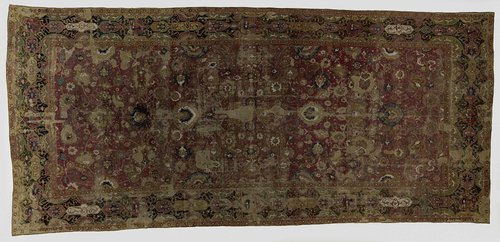
This magnificent *Oosters tapijt*, "Eastern Carpet," is a monumental woolen textile dating from the 16th to 17th century, measuring an impressive 500 cm high by 228 cm wide. Likely imported from the Ottoman Empire or Persia, such carpets were prized in Europe for their intricate weaving techniques and vibrant designs, often featuring floral motifs, medallions, or geometric patterns symbolizing cultural exchange along ancient trade routes like the Silk Road. Woven from durable wool, this piece exemplifies the technical mastery of Eastern knotting methods—such as the Turkish or Persian knot—that allowed for dense, detailed pile carpets enduring centuries of use. Its history adds layers of intrigue: once part of the renowned collection of Dr. Fritz Mannheimer, a Dutch banker and art aficionado, it passed through financial upheavals in the 1930s before being acquired in 1940 by the Nazis for Adolf Hitler's planned Führermuseum in Linz. Post-war, Dutch authorities recuperated it through the Stichting Nederlands Kunstbezit (SNK) in 1945, restoring it to public view via loan to the Rijksmuseum in 1952 and permanent transfer in 1960. Today, it stands as a testament to resilience, bridging Eastern artistry with Europe's turbulent 20th-century past.