
Oosters tapijt
1700 - 1900
Medium
wool
Dimensions
160; 389
Rights
Public Domain
About this artwork
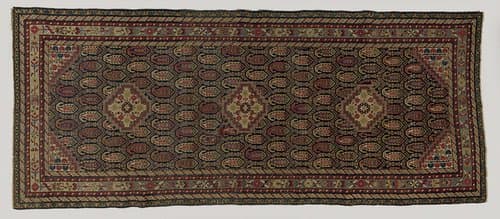
Oosters tapijt, bloemenkleed, medaillinkleed met rijen botehs, en drie medaillons. De breedste rand is versierd met rozetten.
Art Historical Context
Nestled in our collection is the *Oosters tapijt*, anonymous Eastern carpet woven from wool between 1700 and 1900. Measuring an impressive 389 cm high by 160 cm wide, this elongated textile—likely intended as a hanging or room divider—showcases a vibrant "bloemenkleed" (flower carpet) design. Its central field bursts with rows of bote motifs, the iconic teardrop-shaped paisley patterns originating from Persian traditions, framed by three prominent medallions. The widest border dazzles with rosettes, adding a rhythmic elegance to the composition. Crafted in the rich weaving techniques of the East, probably Persia or nearby regions, this rug exemplifies the opulence of 18th- and 19th-century Oriental textiles. Wool's durability and dye-fastness allowed for intricate knotting—often tens of thousands per square meter—creating depth and luminosity that captivated European collectors through trade routes like the Dutch East India Company. The medallion layout and floral abundance reflect Islamic artistic principles, emphasizing symmetry and paradise gardens without figurative imagery. This piece whispers of cultural exchange, bridging Eastern craftsmanship with Western admiration. Its survival highlights the enduring allure of these "medaillinkleed" (medallion carpets), symbols of luxury and artistry that adorned grand homes and inspired textile revival movements in Europe. A timeless thread in global design history!
About the Artist
anonymous
In the vast tapestry of art history, "Anonymous" stands not as a singular individual but as a collective designation for countless unidentified creators whose works have endured across millennia. These artists, spanning prehistoric cave painters to medieval illuminators and folk craftsmen, produced the foundational layers of human visual culture. Prior to the Renaissance, when individual fame emer...