
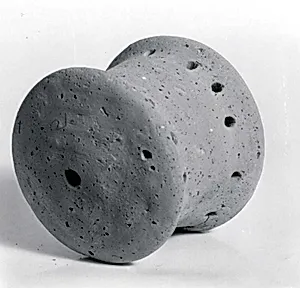
Openwork rattle
Unknown Artist
ca. late 8th–7th century BCE
Medium
Ceramic
Dimensions
2.56 in. (6.5 cm)
Classification
Ceramics-Implements
Culture & Period
Israelite · Iron Age II
Department
Ancient Near Eastern Art
Museum
Metropolitan Museum of Art, New York, NY
Credit
Gift of Harris D. and H. Dunscombe Colt, 1934
Accession Number
34.126.54
Rights
Public Domain
Art Historical Context
Step into the world of ancient Israel with this delicate *Openwork rattle*, a ceramic treasure from the late 8th–7th BCE, during Iron Age II. Crafted by an unknown artisan, this tiny implement measures just 2.56 inches (6.5 cm) high and now graces the Metropolitan Museum of Art Ancient Near Eastern Art department thanks to a 1934 gift from Harris D. and H. Dunscombe Colt. The rattle's standout feature is its openwork design—intricate piercings or lattice patterns in fired clay that allowed it to produce a gentle shaking sound when moved. Ceramic rattles like this were rare feats of ancient pottery technique, requiring precise hand-building and firing to maintain structural integrity while enabling acoustic play. Likely used as a toy for children or perhaps in rituals, it offers a charming glimpse into everyday Israelite life amid the bustling kingdoms of Israel and Judah, just before the Assyrian invasions reshaped the region. This artifact whispers of a culture blending utility and whimsy, reminding us how even small objects carried profound joy and meaning in the Iron Age. Pause and imagine a child's laughter echoing through a Judean village over 2,700 years ago.