
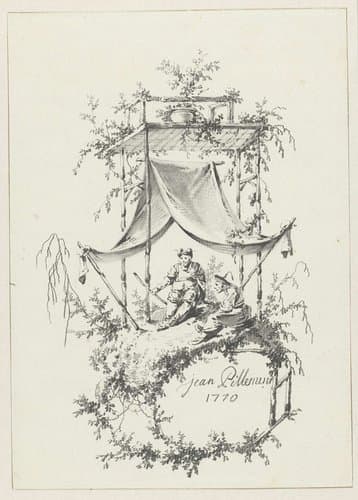
Ornamentale ontwerpen in chinoiserie-stijl voor Deuxième Cahier de six Baraques Chinoises
Medium
black chalk
Dimensions
171; 240
Rights
Public Domain
About this artwork
collector's mark, verso, lower left: Lugt 2165
Art Historical Context
This delicate black chalk drawing by Jean Baptiste Pillement captures the playful spirit of chinoiserie, a European fascination with imagined Chinese motifs that flourished in the 18th century. Created in 1770, the sheet belongs to designs for the *Deuxième Cahier de six Baraques Chinoises*, a series of ornamental patterns intended for decorative prints or applied arts such as textiles and wallpapers. At just 240 by 171 millimeters, the intimate scale suggests it served as a working study, allowing Pillement to refine the whimsical pavilions, exotic figures, and curling foliage that defined his signature style. Pillement, a leading French exponent of Rococo chinoiserie, traveled widely and supplied designs across Europe. His black chalk technique lends soft, fluid lines that evoke the lightness of the genre, transforming Eastern-inspired elements into elegant, lighthearted fantasies suited to aristocratic interiors. The verso collector’s mark (Lugt 2165) hints at the drawing’s journey through distinguished cabinets, underscoring how such preparatory works were treasured by connoisseurs long after their practical purpose was fulfilled. Today the sheet offers a charming glimpse into the cross-cultural exchanges that shaped 18th-century taste, reminding viewers how artists like Pillement blended observation, invention, and commerce to create enduring decorative dreams.
About the Artist
Jean Baptiste Pillement · 1728–1808
In the early part of his career, he worked as a textile designer at the Gobelins factory, and as a decorative painter in Spain and Portugal. He eventually moved to London, where in 1955 he published the first of many books of Chinoiserie designs. However, he was most well-known for his prints of flowers. His popularity waned significantly when Rococo design fell out of fashion at the end of the ce...