
Ostrakon
Unknown Artist
7th century
Medium
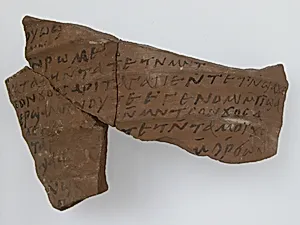
Pottery fragment with ink inscription
Dimensions
4 1/4 x 6 11/16 in. (10.8 x 17 cm)
Classification
Ceramics
Culture
Coptic
Department
Medieval Art
Museum
Metropolitan Museum of Art, New York, NY
Credit
Rogers Fund, 1912
Accession Number
12.180.196
Rights
Public Domain
Tags
Art Historical Context
Step into the world of 7th-century Coptic with this intriguing *Ostrakon*, a pottery fragment measuring just 4¼ x 6⅝ inches (10.8 x 17 cm). Created by an unknown artist, it features an ink inscription on broken ceramics, a common medium in ancient and medieval Egypt where discarded potsherds served as affordable "scratch pads" for writing. Acquired through the Rogers Fund in 1912, this piece now resides in the Metropolitan Museum of Art's Medieval Art department, classified under Ceramics and tagged as a Coptic document. Ostraca like this one offer a rare glimpse into everyday life during the transitional era of Coptic culture, blending late antique Egyptian traditions with emerging Christian influences around the time of the Arab conquest (circa 639–642 CE). Unlike precious papyrus reserved for official or literary works, these fragments captured personal notes, letters, receipts, or religious texts in the Coptic script—a vernacular evolution of Greek and Demotic that preserved Egypt's Christian identity amid cultural shifts. Though utilitarian rather than ornate, the ink technique highlights practical artistry: bold, functional strokes on irregular surfaces that prioritized communication over aesthetics. This ostrakon underscores the literacy and administrative vibrancy of Coptic society, reminding us how humble artifacts illuminate history's hidden voices.