
Ostrakon
Unknown Artist
600
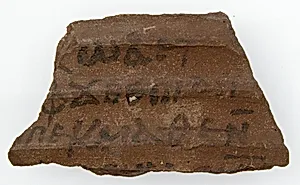
Medium
Pottery fragment with ink inscription
Dimensions
1 3/8 x 2 3/8 in. (3.5 x 6 cm)
Classification
Ceramics
Culture
Coptic
Department
Medieval Art
Museum
Metropolitan Museum of Art, New York, NY
Credit
Rogers Fund, 1914
Accession Number
14.1.57
Rights
Public Domain
Tags
Art Historical Context
Welcome to the Medieval Art galleries, where this humble *Ostrakon* from around 600 AD offers a window into everyday life in Coptic Egypt.ed from a simple pottery fragment—just 1 3/8 x 2 3/8 inches—this artifact bears an ink inscription, transforming discarded shards into practical writing surfaces. In a time when papyrus was costly and scarce, ancient Egyptians, including the Christian Coptic communities, repurposed broken pottery (known as ostraka) for everything from letters and receipts to school exercises and magical texts. This piece exemplifies Coptic culture's blend of Egyptian traditions and emerging Christian influences during the early medieval period. The ink technique—likely applied with a reed pen—highlights the resourcefulness of scribes in monastic or urban settings. As a document, it preserves glimpses of literacy and administration in a pivotal era of religious and cultural transition under Byzantine rule. Though small, this Rogers Fund acquisition from 1914 at the Metropolitan Museum of Art underscores the archaeological value of such fragments. They reveal the voices of ordinary people, making history feel intimately close. What secrets might its faded script hold?