
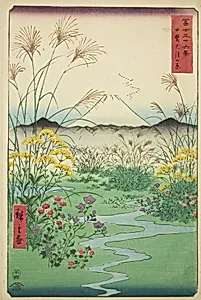
Otsuki Plain in Kai Province (Kai Otsuki no hara), from the series "Thirty-six Views of Mount Fuji (Fuji sanjurokkei)"
Medium
Color woodblock print; oban
Classification
Department
Arts of Asia
Museum
Art Institute of Chicago
Accession Number
59081
Rights
Public Domain
Art Historical Context
In Utagawa Hiroshige's *Otsuki Plain in Province (Kai Otsuki hara)* from his renowned series *Thirty-six Views Mount Fuji (Fuji sanjurokkei)*, created in 1858, the master ukiyo-e artist captures a sweeping landscape vista. Hiroshige, a leading figure in Japan's "pictures of the floating world" tradition, elevates everyday scenes through poetic naturalism. Here, the vast plain of Kai Province stretches toward the iconic Mount Fuji, shrouded in mist, emphasizing the mountain's spiritual dominance in Japanese culture. This color woodblock print, in the large oban format (about 10 x 14 inches), exemplifies the collaborative artistry of Edo-period printmaking. Craftsmen meticulously carved blocks for each color layer—often over a dozen—allowing vibrant blues, greens, and subtle gradations that evoke atmospheric depth. Produced late in Hiroshige's career, it reflects his innovative rivalry with Hokusai, blending bold composition with emotional resonance amid Japan's shift toward modernization. Housed in the Art Institute of Chicago's Arts of Asia department, this work highlights ukiyo-e's global influence, inspiring Impressionists like Monet. For visitors, it invites reflection on nature's timeless allure, a hallmark of Hiroshige's enduring legacy.
About the Artist
Utagawa Hiroshige · 1826–1869
Utagawa Hiroshige (1797–1858), born Andō Tokutarō, was the last great master of Japanese ukiyo-e woodblock printmaking and one of the most influential landscape artists in history. Born in Edo (modern Tokyo) into a low-ranking samurai family serving as fire wardens, Hiroshige transformed landscape printmaking into a poetic meditation on nature, weather, and everyday life. His revolutionary approac...