
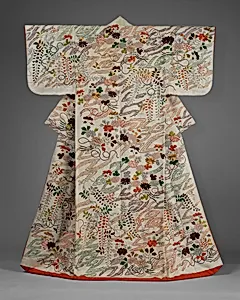
白綸子地菊藤花束雲模様打掛|Outer Robe (Uchikake) with Chrysanthemum and Wisteria Bouquets
Unknown Artist
second half of the 18th–first half of the 19th century
Medium
Silk and metallic-thread embroidery on resist-dyed and painted silk satin damask (rinzu)
Dimensions
Overall: 72 x 49 1/2 in. (182.9 x 125.7 cm)
Classification
Costumes
Culture & Period
Japan · Edo period (1615–1868)
Department
Asian Art
Museum
Metropolitan Museum of Art, New York, NY
Credit
Gift of Mrs. Juliet Boone, 1981
Accession Number
1981.60.1
Rights
Public Domain
Art Historical Context
This stunning *uchikake*, or outer robe, hails from Japan's Edo period (1615–1868), the late 18th to early 19th century. Worn by brides over a kimono during wedding ceremonies or festive occasions, it exemplifies the era's opulent fashion, where clothing served as a canvas for artistic expression and social display. Measuring an impressive 72 x 49½ inches, this garment would have draped elegantly, its vast scale allowing for bold, immersive designs that celebrated nature's beauty. Crafted from luxurious silk satin damask (*rinzu*), the robe features resist-dyed and painted grounds adorned with intricate silk and metallic-thread embroidery. Bouquets of chrysanthemums and wisteria—symbols of longevity and grace in Japanese culture—float amid cloud motifs, creating a dreamlike procession across the fabric. The *rinzu* technique, with its subtle raised patterns from the damask weave, adds texture and depth, while metallic threads catch the light, evoking shimmering skies. As a gift to the Metropolitan Museum of Art from Mrs. Juliet Boone in 1981, this anonymous masterpiece highlights Edo textile artistry's technical virtuosity and cultural prestige, offering visitors a glimpse into Japan's refined aesthetic traditions.