
Overseer Shabti of Nauny
Unknown Artist
ca. 1050 B.C.
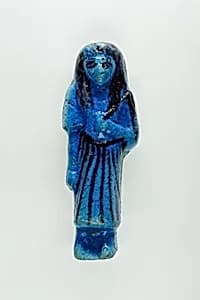
Medium
Faience
Dimensions
H 9.5 × W 3.4 × D 2.2 cm (3 3/4 × 1 5/16 × 7/8 in.)
Classification
Shabti, overseer, reis, Nauny
Period
Third Intermediate Period
Department
Egyptian Art
Museum
Metropolitan Museum of Art, New York, NY
Credit
Rogers Fund, 1930
Accession Number
30.3.26.5
Rights
Public Domain
Art Historical Context
Step into the mystical world of ancient Egypt with the *Overseer Shabti of Nauny*, a petite faience figurine from around 1050 B.C., crafted during Dynasty 21 of the Third Intermediate Period. Standing just 9.5 cm tall, this small guardian was designed for the tomb of Nauny, likely a noblewoman or priestess, as part of an elite funerary ensemble. Shabtis like this one were magical servants, enchanted to perform laborious tasks in the afterlife, allowing their owner eternal leisure. Made of faience—a glazed, colorful ceramic mimicking turquoise or lapis lazuli—this overseer shabti supervised groups of worker figurines, ensuring smooth operations in the realm of Osiris. The vibrant blue-green glaze and precise molding highlight the era's advanced ceramic techniques, blending artistry with profound religious symbolism. Inscriptions, typical of shabtis, invoked spells from the Book of the Dead, animating these figures for eternity. Acquired through the Rogers Fund in 1930, this piece from the Metropolitan Museum of Art's Egyptian collection offers a window into Theban beliefs during a time of political flux, when spiritual devotion flourished amid division. A testament to Egypt's enduring quest for immortality, it reminds us how even the smallest artifacts carried immense cosmic weight.