
Pair of pomade pots (part of a toilet service)
ca. 1684
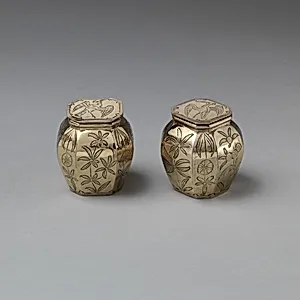
Medium
Silver gilt
Dimensions
Overall: H. 2 3/16 x W. 2 x D. 2 in., 3 oz. 4 dwt. (5.6 x 5.1 x 5.1 cm, 0.1kg)
Classification
Metalwork-Silver
Culture
British, London
Department
European Sculpture and Decorative Arts
Museum
Metropolitan Museum of Art, New York, NY
Credit
Fletcher Fund, 1963
Accession Number
63.70.18a, b, .19a, b
Rights
Public Domain
Tags
Art Historical Context
Crafted around 1684 by London silversmith Thomas Jenkins, this exquisite pair of pomade pots forms part of a grand toilet service—a luxurious ensemble of vessels for personal grooming used by the British elite during the late Stuart era. Made of silver gilt, where a thin layer of gold is applied over silver for a radiant, durable finish, these petite pots (just over 2 inches tall) exemplify the opulence of Restoration England. Their compact size belies their status as cherished possessions, holding pomade, a scented ointment for hair and skin. Adorned with delicate motifs of birds and flowers—likely chased or engraved into the surface—these pots showcase Jenkins' mastery of intricate metalwork. London hallmarks from this period certified the maker's quality, making such pieces both functional art and symbols of wealth. Toilet services like this were displayed on dressing tables, blending utility with display to impress guests. Today, housed in The Metropolitan Museum of Art's European Sculpture and Decorative Arts department (acquired via the Fletcher Fund in 1963), they offer a glimpse into 17th-century domestic luxury and the thriving silver trade in London, where craftsmanship rivaled the finest courts of Europe. A delightful testament to everyday elegance for the aristocracy!