
Pair of Stirrups
Unknown Artist
19th century
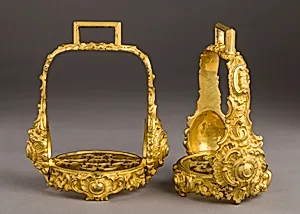
Medium
Copper alloy, gold
Dimensions
1972.94.1; H. 7 7/8 in. (20 cm); W. 6 1/2 in. (16.5 cm); D. 4 3/4 in. (12.1 cm); Wt. 2 lb. 12.2 oz. (1253 g); 1972.94.2; H. 8 in. (20.3 cm); W. 6 1/2 in. (16.5 cm); D. 4 5/8 in. (11.7 cm); Wt. 2 lb. 12.2 oz. (1253 g)
Classification
Equestrian Equipment-Stirrups
Culture
Portuguese
Department
Arms and Armor
Museum
Metropolitan Museum of Art, New York, NY
Credit
Purchase, Bashford Dean Bequest, 1972
Accession Number
1972.94.1, 2
Rights
Public Domain
Art Historical Context
This exquisite pair of Portuguese stirrups from the 19th century exemplifies the blend of functionality and opulence in equestrian gear. Crafted from copper alloy and adorned with gold, each stirrup is impressively substantial—measuring around 8 inches high and weighing over 2.5 pounds—designed to provide secure footing for riders during mounted combat or travel. Housed in the Metropolitan Museum of Art's and Armor Department, they highlight the technical prowess of Portuguese metalworkers, who likely employed gilding techniques to apply precious gold overlay, enhancing both durability and visual splendor. In 19th-century Portugal, stirrups like these were essential for cavalry and nobility, reflecting a rich equestrian heritage tied to the nation's seafaring and colonial past. The lavish gold detailing suggests they belonged to a high-ranking officer or elite horseman, where such items served as symbols of status amid military campaigns. Their robust construction underscores the demands of horseback warfare, while the ornate finish reveals artistic refinement in everyday armor. These stirrups invite us to ponder the unsung artistry of equestrian equipment, bridging utility and prestige in Portuguese culture. A gift from the Bashford Dean Bequest, they remind visitors of the Met's commitment to preserving such treasures.