
Pair of tassels
Unknown Artist
17th century
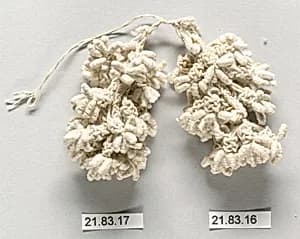
Medium
Linen
Dimensions
L. (each) 3 inches (7.6 cm)
Classification
Textiles-Trimmings
Culture
Italian
Department
European Sculpture and Decorative Arts
Museum
Metropolitan Museum of Art, New York, NY
Credit
Gift of Mrs. J. Pierpont Morgan, 1921
Accession Number
21.83.16, .17
Rights
Public Domain
Art Historical Context
Nestled in the Metropolitan Museum of Art's European Sculpture and Decorative Arts collection, this pair of 17th-century Italian tassels exemplifies the exquisite craftsmanship of Baroque-era textiles. Crafted from fine linen, each tassel measures just 3 inches (7.6 cm) in length, making them delicate accents designed to add elegance and movement to garments, furnishings, or ecclesiastical vestments. Their modest scale belies their role as luxurious trimmings, where intricate knotting and twisting techniques transformed simple threads into ornamental flourishes. In 17th-century Italy, a hub of opulent decorative arts during the Baroque period, tassels like these were essential to the visual splendor of daily life and high fashion. Linen, a durable yet refined natural fiber, was prized for its crisp texture and ability to hold complex shapes, often used in lace-making traditions such as needle or bobbin work that showcased Italian virtuosity. These trimmings might have dangled from curtains, bed hangings, or clerical robes, symbolizing wealth and piety amid the era's dramatic artistic expressions. A generous gift from Mrs. J. Pierpont Morgan in 1921, these tassels offer visitors a tactile glimpse into Italy's textile heritage, highlighting how everyday materials could achieve artistic grandeur. Though by an unknown artist, their preservation underscores the enduring appeal of functional beauty in decorative arts.