
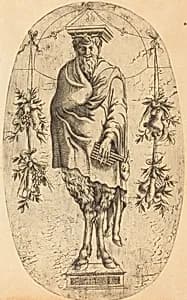
Pan
1543/1545
Medium
etching
Dimensions
sheet: 26.8 × 18.2 cm (10 9/16 × 7 3/16 in.)
Classification
Department
CG-E
Museum
National Gallery of Art, Washington, D.C.
Credit
Rosenwald Collection
Accession Number
1964.8.865
Rights
Public Domain
Art Historical Context
Jean Mignon's *Pan*, created between 1543 and 1545, is a captivating etching from the French Renaissance, measuring 26.8 × 18.2 cm. Housed in the National Gallery of Art Rosenwald Collection, this exemplifies the artist's skill in translating intricate designs into reproducible art. Mignon, a prominent engraver active at the Fontainebleau court, drew inspiration from Italian Mannerist influences, blending elegant linework with mythological themes. The god Pan—half-man, half-goat, symbol of untamed nature and rustic music—emerges as a lively subject, reflecting the era's fascination with classical antiquity revived during the Renaissance. Etching, Mignon's favored medium, marked a technical leap in 16th-century printmaking. By drawing into a wax ground on a metal plate and submerging it in acid, artists achieved fluid, expressive lines impossible with traditional engraving. This innovation allowed wider dissemination of sophisticated imagery, bridging courtly workshops and broader audiences. *Pan* showcases Mignon's mastery of tonal gradations and dynamic poses, hallmarks of the Fontainebleau School's fusion of French delicacy and Italian flair. As a cultural artifact, the work captures the humanist spirit of the mid-1500s, when gods like Pan embodied pastoral freedoms amid royal patronage. Visitors will appreciate its delicate craftsmanship, inviting closer inspection of the sheet's subtle textures and the enduring allure of Renaissance mythology.