
Panel
Unknown Artist
14th–15th century
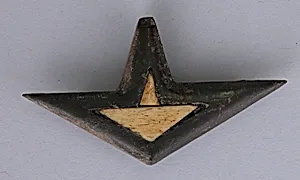
Medium
Wood; inlaid with ivory
Dimensions
Ht. 1 7/16 in. (3.6 cm) W. 2 9/16 in. (6.5 cm) D. 3/8 in. (1 cm)
Classification
Wood
Department
Islamic Art
Museum
Metropolitan Museum of Art, New York, NY
Credit
Rogers Fund, 1907
Accession Number
07.236.121
Rights
Public Domain
Art Historical Context
This exquisite wooden panel, crafted by an unknown artist in the th–15th century exemplifies the refined artistry of Islamic craftsmanship. Measuring just 1 7/16 inches high by 2 9/16 inches wide, its diminutive scale—barely larger than a modern postage stamp—suggests it adorned a small luxury object, such as casket, box, or furniture inlay. The medium of wood delicately inlaid with ivory highlights the technical virtuosity of the era, where thin ivory pieces were precisely cut and embedded to create contrasting textures and subtle luminosity. In the Islamic world, such panels were prized for their intricate work, often featuring geometric patterns or arabesques that reflected cultural values of harmony and infinite repetition. The ivory inlay technique, requiring immense skill and rare materials, signified wealth and piety, transforming everyday wood into objects of spiritual and aesthetic beauty. Dating to a golden age of Islamic decorative arts, this piece captures the period's fusion of functionality and opulence. Acquired through the Rogers Fund in 1907 and now housed in the Metropolitan Museum of Art's Islamic Art department, the panel invites us to marvel at the anonymous hands behind centuries-old splendor, reminding visitors of the enduring legacy of medieval artisans.